
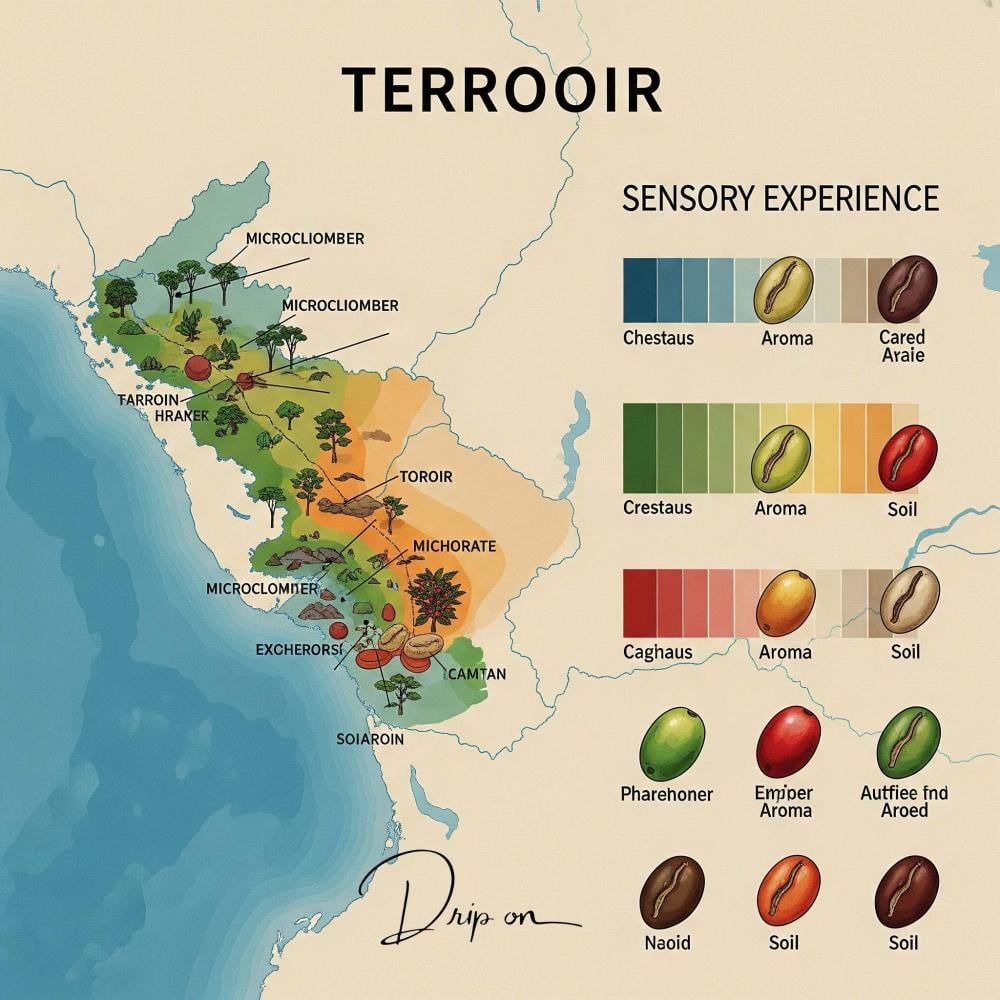
Have you ever wondered why some coffees boast vibrant fruity notes, while others feature rich earthy undertones or bright citrus? The secret often lies in a concept known as "terroir." Originating in the world of wine, this term has become a cornerstone of understanding the complexities and aesthetics of specialty coffee. It's not just a fancy word; it's the essence of each coffee bean's character—the unique imprint a place leaves on your cup.
In this comprehensive guide, we'll delve deep into the world of terroir, exploring how environmental and geographical factors intertwine with farming practices to give your coffee the distinctive flavor you enjoy. We'll highlight everything you need to know to become an expert in appreciating the impact of terroir on coffee flavor, and you'll learn how to detect these effects yourself with every sip.
What is "terroir"? Understanding the concept from the world of wine to coffee
The word "terroir" is a French word that is difficult to translate literally into Arabic, but it refers to the set of environmental and geographical factors that influence crop growth, and consequently, its quality and final flavor. Originally, this concept was associated with wine production, where the characteristics of the soil, climate, altitude, and even the agricultural traditions of a particular region determine the identity of its wine.
Although the coffee tree differs from the grapevine, the basic principles of terroir apply equally well. Just like wine, the final flavor of coffee is greatly influenced by the environment in which it was grown. Terroir can explain why Colombian coffee has nutty and chocolatey notes, while Ethiopian coffee boasts complex floral and fruity nuances. It is the unique blend of these factors that gives each coffee region its own distinctive "signature."
The four corners of the terroir and their effect on coffee beans
The terroir consists of a complex set of factors that interact to shape the flavor of coffee. We can simplify it to four basic pillars: climate, soil, altitude, and topography.
Climate: Sun, rain, and wind create the flavor.
Climate is one of the strongest influences on coffee cultivation. The coffee tree (especially Arabica) requires very specific climatic conditions to grow and produce high-quality beans.
- Temperature: Arabica coffee trees prefer moderate temperatures between 18 and 22 degrees Celsius. Large fluctuations in temperature can negatively affect bean growth.
- Rainfall: Coffee trees need plenty of rain, but short dry spells are necessary to stimulate flowering. A consistent distribution of rainfall throughout the growing season is vital.
- Sunlight: The right amount of sunlight is essential for photosynthesis and the formation of sugars and acids in the beans. However, excessive sun exposure can cause sunburn. Therefore, coffee trees are often planted under large shade trees for protection and temperature regulation.
- Wind: Wind can affect temperatures and humidity, and it also plays a role in pollinating flowers.
How does climate affect flavor? A suitable climate ensures slow and stable growth of the coffee bean, allowing it to develop more complex flavor compounds and accumulate sugars and organic acids that contribute to acidity and sweetness.
Soil: the foundation of life and the flavor of coffee.
Soil type is another crucial factor in the terwar, as it is from the soil that the coffee tree derives the nutrients and minerals necessary for its growth.
- Volcanic soil: Rich in minerals and organic matter, it provides excellent drainage, making it ideal for coffee cultivation. This type of soil is common in regions such as Central and South America and parts of Africa, and contributes to the production of coffee with bright acidity and complex fruity and floral flavors.
- Clay soil: retains water well and can be rich in nutrients.
- Sandy soil: Provides good drainage but may require additional fertilization.
- pH level: Coffee trees prefer slightly acidic soil (pH between 5.5 and 6.5).
How does soil affect flavor? Soil rich in essential nutrients and minerals provides a strong tree and a healthy coffee bean, which is reflected in the complexity of flavors and the addition of distinctive mineral or earthy dimensions to some types of coffee.
Height: The secret of acidic and aromatic density.
Height is one of the most important factors that are emphasized in specialty coffee, and for good reason.
- Low temperatures: The higher the altitude, the lower the temperature, resulting in slower growth of the coffee bean.
- Sugar accumulation: This slow growth allows the grain to accumulate more complex sugars and organic acids, giving it a brighter acidity, higher sweetness, and more intense and complex flavors.
- Density: Coffee grown at high altitudes (High Grown - HG or Strictly High Grown - SHG) has denser and harder beans.
How does altitude affect flavor? High-altitude coffee often features citrus fruit flavors (such as lemon and orange), floral notes (jasmine), and a sweetness similar to honey or caramel, as well as a light and clean body.
Topography and location: How slope and neighborhood shape your flavor.
The terrain and location of the farm greatly affect the terwar.
- Land slope: The angle of the land slope affects the amount of sunlight a coffee tree receives, as well as water distribution and drainage. Slopes allow for good water drainage, which prevents root rot.
- Direction of sun exposure: Does the farm face east or west? This determines the quantity and quality of sunlight that the trees receive.
- Proximity to bodies of water or forests: Large bodies of water can affect humidity and temperature levels, while forests provide necessary shade and protect the soil.
- Surrounding plants: Other nearby plants can affect the soil and provide natural shade, and in some cases, can even contribute to unique flavors in coffee (although this effect is debatable).
How does topography affect flavor? It can contribute to subtle differences in flavor, such as coffee texture, or highlight certain flavors due to microclimates (microclimates) that form in small areas within a single farm.
From farm to cup: The journey of the terroir in coffee processing
The influence of the terwar extends beyond the growth of the coffee bean; it encompasses the methods used to harvest and process the coffee. Experienced farmers are well aware of how processing methods can either highlight or conceal the unique terwar characteristics of the beans.
- Washed Process: This method emphasizes clean acidity and bright floral and fruity flavors, allowing the essential characteristics of the terroir to stand out clearly.
- Natural Process: This method can add sweet, intense fruity flavors (often berry or tropical) and a heavier texture, and may hide some of the subtle differences in the terroir due to the overwhelming fruit flavors.
- Honey Process: It lies between the two, offering a balance between acidity and cleanliness with added sweetness and texture.
Choosing the appropriate processing method depends on the type of coffee bean and its specific characteristics, with the aim of maximizing its inherent flavor potential.
Real-life examples: How does the terwar manifest itself in the world's most famous coffee regions?
To better understand the terminology, let's explore some global examples:
- Ethiopia (such as Yergacheva, Sidamo): Ethiopian coffee is often characterized by high altitudes, rich volcanic soil, and a rainy climate. This combination produces coffee with a bright acidity, floral (jasmine, bergamot), and fruity (blueberry, citrus) notes, and a light, clean body. This is Ethiopian terwar at its finest.
- Colombia: Colombia is known for its high altitudes and volcanic soil. Its coffee is often medium-bodied, with balanced acidity and classic flavors of chocolate, caramel, and nuts, with subtle hints of fruit.
- Indonesia (such as Sumatra and Java): Characterized by a hot, humid tropical climate and volcanic soil, its coffee is often heavy, low in acidity, and has earthy, woody, and spicy flavors, with hints of dark chocolate or dried fruit. The humid climate also contributes to unique processing methods such as "wet husk" (Giling Basah), which enhance these earthy characteristics.
- Kenya: Kenya is known for its red volcanic soil and high altitudes. This climate produces coffee with a complex, tomato-like acidity, dark fruit (blackcurrant) notes, and a full body.
Each region tells a unique story through its coffee, a story directly influenced by its terwar.
How to detect the effect of the terwar in your cup? A tasting guide.
As a coffee connoisseur or barista, you can hone your ability to discern the terroir effect through conscious practice. Here are some tips:
- Focus on Single Origin: Start by tasting coffee from a single source, where the characteristics of the terroir are more pronounced.
- Research: Before tasting, find out about the coffee's origin: country of origin, region, altitude, and even soil type if possible. driponcoffeesa.com provides this information for its products to help you.
- Aware Tasting: Aroma: Before tasting, smell the coffee. Do you smell floral, fruity, earthy, or nutty aromas?
- Acidity: Is the acidity bright and refreshing (like lemon or apple), or more moderate and rounded? Elevation often has an effect here.
- Flavor: What flavors characterize it? Is it citrus, berry, chocolate, caramel, spices? Think about how these flavors might be related to terwar factors.
- Body: Is the coffee light and clean, or thick and creamy?
- Aftertaste: What remains in your mouth after sipping coffee? Is it long and clean, or short and bitter?
- Comparison: Taste two coffees from different regions with different terroirs side by side (e.g., Ethiopian coffee and Colombian coffee) to clearly observe the differences.
- Record your observations: Write down what you tasted, any information about the terroir, and how you think it relates to the flavors. This helps build a strong flavor memory.
Conclusion
Understanding the terroir adds a whole new dimension to your appreciation of your daily cup of coffee. It reminds us that coffee is not just a beverage, but a complex product of the environment in which it originated, the efforts of farmers, and the interaction between nature and humans. In every sip, there is a story told by the land and climate, a story of a unique flavor that cannot be replicated.
Appreciating coffee goes beyond just taste; it involves understanding its journey, from the seed in fertile soil to the warm cup in your hands. Discover our selection of coffee beans from different regions at driponcoffeesa.com and experience the terroir effect for yourself! Share with us in the comments: What's your favorite cup of coffee and what terroir effect do you notice in it?
