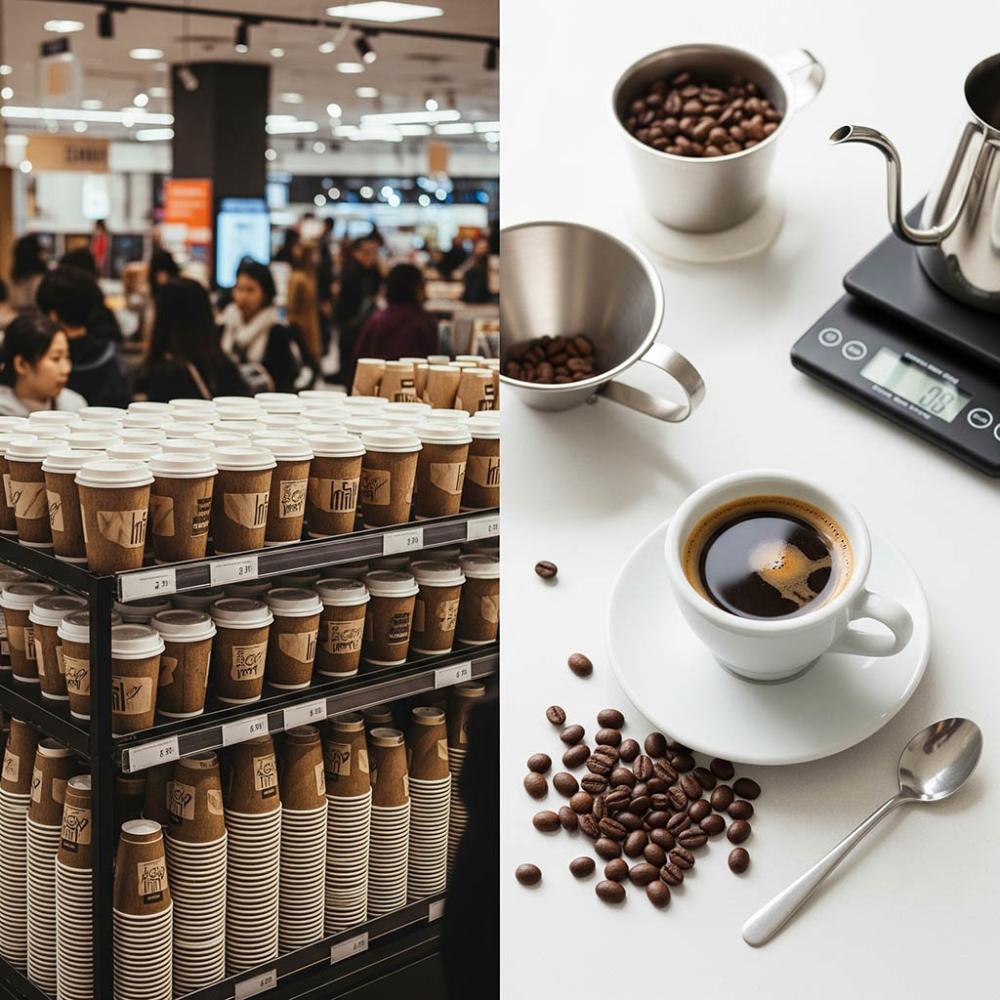
Specialty vs. Commercial Coffee: A Journey from Farm to Cup
Have you ever wondered about the difference between your everyday cup of coffee and that exceptional cup that leaves a lasting impression? The answer lies in distinguishing between specialty coffee and commercial coffee . In this article, we'll delve into the world of coffee to uncover the fundamental differences between these two types, and why some consider specialty coffee a unique experience worth exploring.
What is commercial coffee?
Commercial coffee is what you typically find in supermarkets and widely available coffee shops. Its main purpose is mass production to meet global demand. This coffee is usually characterized by the following features:
- Quality and Flavor: Quantity is often prioritized over quality. It may contain a blend of coffee beans from different sources, and some beans with minor imperfections may be used. The flavor is uniform and homogeneous, often leaning towards bitterness or excessive acidity, and it may be dark roasted to mask any flaws in the beans.
- Production and processing: Commercial coffee is produced in large quantities using large machinery and equipment. Processing operations may be less precise, focusing on efficiency and speed.
- Price: They are usually much cheaper than specialty coffee, making them affordable for everyone.
- Packaging: May not provide detailed information about the source of the coffee or how it was processed.
What about specialty coffee?
Specialty coffee is a completely different story. It represents the pinnacle of quality in the coffee world, focusing on every step of the production chain to ensure a unique experience in every cup. Here are its key features:
- Quality and Flavor: Specialty coffee is graded based on a rigorous evaluation system by certified graders (Q Graders), where it must score 80 points or more out of 100. This evaluation ensures the purity and flawlessness of the beans, and their presentation of a wide range of complex and balanced flavors, such as fruits, nuts, chocolate, or even flowers.
- Source and Traceability: The source of specialty coffee beans can be accurately traced, from farm to cup. Specialty coffee growers take great care in processing the beans, from cultivating specific coffee varieties and selective harvesting to drying and processing methods (such as washed, natural, or honey processing).
- Roasting: Specialty coffee is roasted by expert roasters who are fully aware of the characteristics of each type of coffee bean. The goal is to bring out the best flavors inherent in the beans, not to hide them.
- Fairness and sustainability: Farmers who produce specialty coffee are often paid higher prices, which supports sustainability and encourages good agricultural practices. This ensures a better quality of life for farmers and their families.
- Packaging: Specialty coffee packaging features detailed information about the coffee's origin, variety, processing method, and expected tasting notes.
Key differences: