
Geographical climate: The hidden fingerprint of your fine coffee quality
Have you ever wondered why coffee flavors vary so dramatically from region to region? The secret lies in the unique geographical climate that influences each coffee bean. Every cup of coffee is distinctive, carrying within it the story of the land where it was brewed. At driponcoffeesa.com , we believe that understanding these factors is key to appreciating the quality of our specialty coffee .
High altitudes: where complex flavors flourish
The finest coffees, especially specialty varieties, are known for being grown at high altitudes. These elevations, often exceeding 1,200 meters above sea level, provide ideal conditions for the slow growth of the coffee bean. This slower growth allows the bean to develop a higher density and a greater concentration of soluble solids, resulting in more complex and deeper flavors. Furthermore, the higher the plantation, the lower the temperature and the less pronounced the fluctuations, which further slows down the ripening process.
Rainfall and drainage: the delicate balance of a coffee tree's life
The amount and timing of rainfall are crucial factors that directly affect coffee quality . Coffee trees need ample rain during the growing season, followed by a relatively dry period during the harvest season. This delicate balance ensures healthy cherry development and optimal flavor development. Additionally, the soil must be well-drained to prevent root rot. Volcanic soils, rich in minerals and with excellent drainage, are often ideal for growing premium coffee.
Temperature: The key to balance and maturity
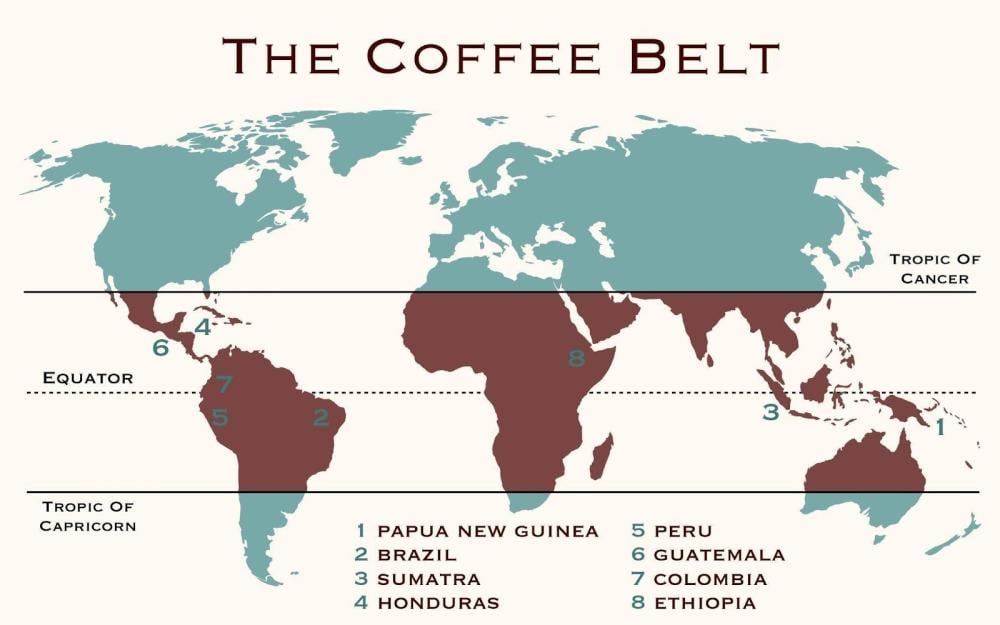
Coffee trees prefer moderate temperatures between 18 and 22 degrees Celsius. Large temperature fluctuations, whether extreme heat or extreme cold, can negatively affect photosynthesis and flavor development. Tropical and subtropical climates, characterized by relatively stable temperatures year-round, are ideal habitats for coffee trees. This thermal stability helps the coffee cherries ripen slowly and evenly, contributing to balanced and mild flavors.
Sunlight: The Energy of Flavor
Sunlight is essential for photosynthesis, the process that produces the sugars within the coffee bean, responsible for its sweet and complex flavors. However, excessive exposure to direct sunlight can be harmful. Therefore, coffee trees are often grown under the canopy of larger trees that provide partial shade, protecting the young trees from excessive heat and helping to regulate soil temperature and moisture.
Soil and topography: the basis of nutrition and growth
Soil rich in organic matter and minerals, and with a suitable pH, is vital for producing high-quality coffee. Volcanic soil, for example, is known for its fertility and ability to provide the nutrients necessary for vigorous coffee tree growth. Sloping terrain also helps drain excess water, preventing root waterlogging and promoting tree health.
In conclusion, appreciating a truly exceptional cup of coffee goes beyond the brewing process. It's about appreciating the long journey of the coffee bean, shaped by the unique geographical and climatic factors of each region. At driponcoffeesa.com , we pride ourselves on offering coffees carefully selected from regions with the best climates, ensuring that every drop delivers an unforgettable experience of authentic specialty coffee .
