
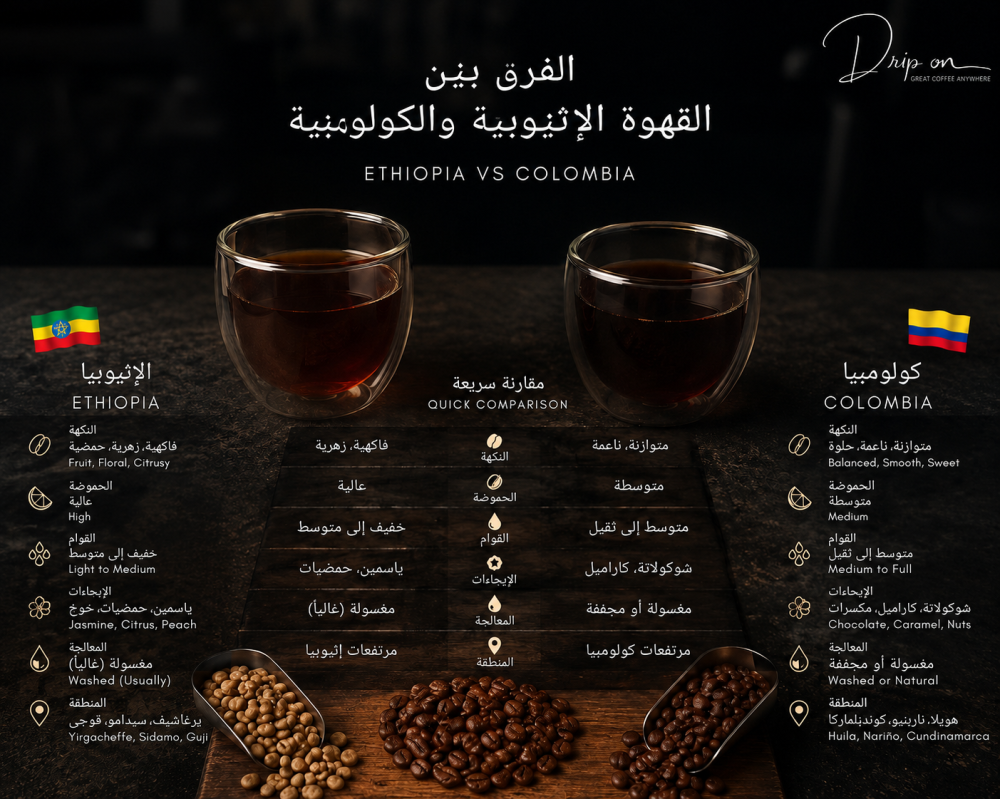
Many coffee lovers seek to understand the differences between Ethiopian and Colombian coffee to grasp the unique characteristics of each and choose the coffee that best suits their personal taste. With the growing interest in specialty coffee, learning about different coffee origins has become an essential part of the tasting experience. Through the products available at Drip On, coffee enthusiasts can explore a wide range of high-quality coffees and discover the differences between Ethiopian and Colombian coffee in a practical and enjoyable way.
Introduction to Ethiopian and Colombian coffee
Ethiopia and Colombia are among the world's most renowned coffee-producing countries, each with a long history of coffee cultivation and processing techniques. Understanding the differences between Ethiopian and Colombian coffee is an essential step for anyone wanting to delve deeper into the world of specialty coffee.
Ethiopia is known as the birthplace of the coffee tree, while Colombia is one of the world's largest producers of high-quality coffee. Although both countries produce excellent coffee, the differences between them are clear in terms of flavor, aroma, body, and processing methods.
Why is it important to know the difference between Ethiopian and Colombian coffee?
Knowing the difference between Ethiopian and Colombian coffee helps you to:
- Choose the coffee that suits your preferences.
- Improving the taste experience.
- Understanding the effect of the coffee source on flavor.
- Choosing the ideal preparation method.
- Enjoy a more professional coffee experience.
Origin of coffee and growing regions
Ethiopian coffee
Ethiopian coffee is grown in highland regions characterized by a temperate climate and mineral-rich soil. Some of the most famous producing regions include:
- Sidamo.
- Yergachev.
- Goji.
- Harar.
These regions play an important role in shaping the unique flavors that characterize Ethiopian coffee.
Colombian coffee
Colombian coffee is grown in the mountain ranges that stretch across the country, particularly in:
- Huila.
- Narinho.
- Kaldas.
- Antioch.
The stable climate and high altitudes are considered among the most important factors in the quality of Colombian coffee.
This aspect demonstrates one of the most important differences between Ethiopian and Colombian coffee in terms of the agricultural environment.
The difference in flavor
Taste is the most prominent factor when talking about the difference between Ethiopian and Colombian coffee .
Ethiopian coffee flavors
Ethiopian coffee is often characterized by:
- Prominent fruity flavors.
- Distinctive floral scents.
- Bright and balanced acidity.
- Touches of berries and citrus.
Many experts describe Ethiopian coffee as complex and rich in aromatic details.
Colombian coffee flavors
In contrast, Colombian coffee is characterized by:
- Chocolate flavors.
- Caramel.
- Nuts.
- Natural, balanced sweetness.
It is considered smoother for many people compared to Ethiopian coffee.
Difference in acidity level
When studying the difference between Ethiopian and Colombian coffee, we find that acidity is an important distinguishing point.
Ethiopian coffee
It tends to:
- Higher acidity.
- Citrus flavors that resemble fruits.
- A brighter sensation in the mouth.
Colombian coffee
It is characterized by:
- Moderate acidity.
- A better balance between sweetness and sourness.
- A smoother taste.
Processing methods and their effect on flavor
Coffee processing methods form an important part of the difference between Ethiopian and Colombian coffee .
Treatment in Ethiopia
This often includes:
- Natural treatment.
- Washed treatment.
Natural processing greatly enhances the fruity flavors.
Treatment in Colombia
Colombia relies primarily on:
- Washed treatment.
This gives Colombian coffee a clean and balanced taste.
Texture and oral sensation
Ethiopian coffee
It is often:
- Light to medium consistency.
- Refreshing.
- It has a smooth texture.
Colombian coffee
It tends to:
- Medium to full texture.
- Relatively creamy texture.
- A rich and balanced feeling.
This represents another aspect of the difference between Ethiopian and Colombian coffee .
The best preparation methods for each type
Ethiopian coffee
Manual filtration methods showcase their characteristics beautifully, such as:
- V60.
- Chemex.
- Kalita Wave.
These methods help to bring out the floral and fruity flavors.
Colombian coffee
Works perfectly with:
- Espresso.
- French Press.
- V60.
- Modern distillation equipment.
Proper roasting
When discussing the difference between Ethiopian and Colombian coffee, roasting should also be considered.
Ethiopian coffee
It is often preferred:
- Light roast.
- Medium to light roast.
To preserve the fruity and floral flavors.
Colombian coffee
It performs well with:
- Medium roast.
- Medium dark roast.
This enhances the flavors of chocolate and caramel.
Which is better for beginners?
There is no one answer that fits all, but it can be said that:
Choose Ethiopian coffee if you prefer:
- Fruity flavors.
- Complex experiments.
- Clear acidity.
Choose Colombian coffee if you prefer:
- Balanced taste.
- Chocolate and caramel.
- Smooth and easy-to-taste coffee.
This aspect is one of the most important points when assessing the difference between Ethiopian and Colombian coffee .
Nutritional value
Nutritionally, there are no significant differences between the two types; both contain:
- Antioxidants.
- Natural caffeine.
- Beneficial plant compounds.
But the real difference lies in the flavor, cultivation methods, and processing.
How do you choose the right type for you?
If you're unsure which coffee to choose, here are some tips:
Choose Ethiopian coffee when:
- She wants to try new flavors.
- She likes specialty coffee with a fruity flavor.
- Manual filtration tools are used.
Choose Colombian coffee when:
- Balance is key.
- You enjoy espresso.
- Looking for a relaxing daily coffee.
Understanding the difference between Ethiopian and Colombian coffee will help you make a more accurate decision.
The role of Drip On store in providing the best types of coffee
Drip On offers a diverse range of specialty coffees from the world’s most famous farms, giving customers the opportunity to compare different types and discover the difference between Ethiopian and Colombian coffee practically through a real tasting experience.
The store also offers:
- Fresh coffee beans.
- Professional preparation tools.
- Carefully selected products.
- Options to suit all levels.
Tips for a professional tasting experience
To maximize the benefit when comparing the two types:
- Use the same preparation tool.
- Maintain the same grind setting.
- Use the same amount of water.
- Take notes while tasting.
- Try more than one source and agricultural area.
This way you will be able to understand the difference between Ethiopian and Colombian coffee more deeply and accurately.
Common mistakes when comparing coffee
One of the most prominent mistakes:
- Using different roasting levels.
- Differences in preparation ratios.
- Using non-fresh grains.
- Ignore the effect of the treatment method.
All these factors may affect your true assessment of the difference between Ethiopian and Colombian coffee .
The difference between Ethiopian and Colombian coffee is a topic of interest to every specialty coffee lover. Ethiopian coffee is characterized by fruity and floral notes and a bright acidity, while Colombian coffee offers a wonderful balance with chocolate, caramel, and nutty flavors. The choice between them depends on your personal preferences and brewing method. With the products available at Drip On, you can explore the finest coffees and try both Ethiopian and Colombian coffees to find the perfect flavor to suit your taste.