
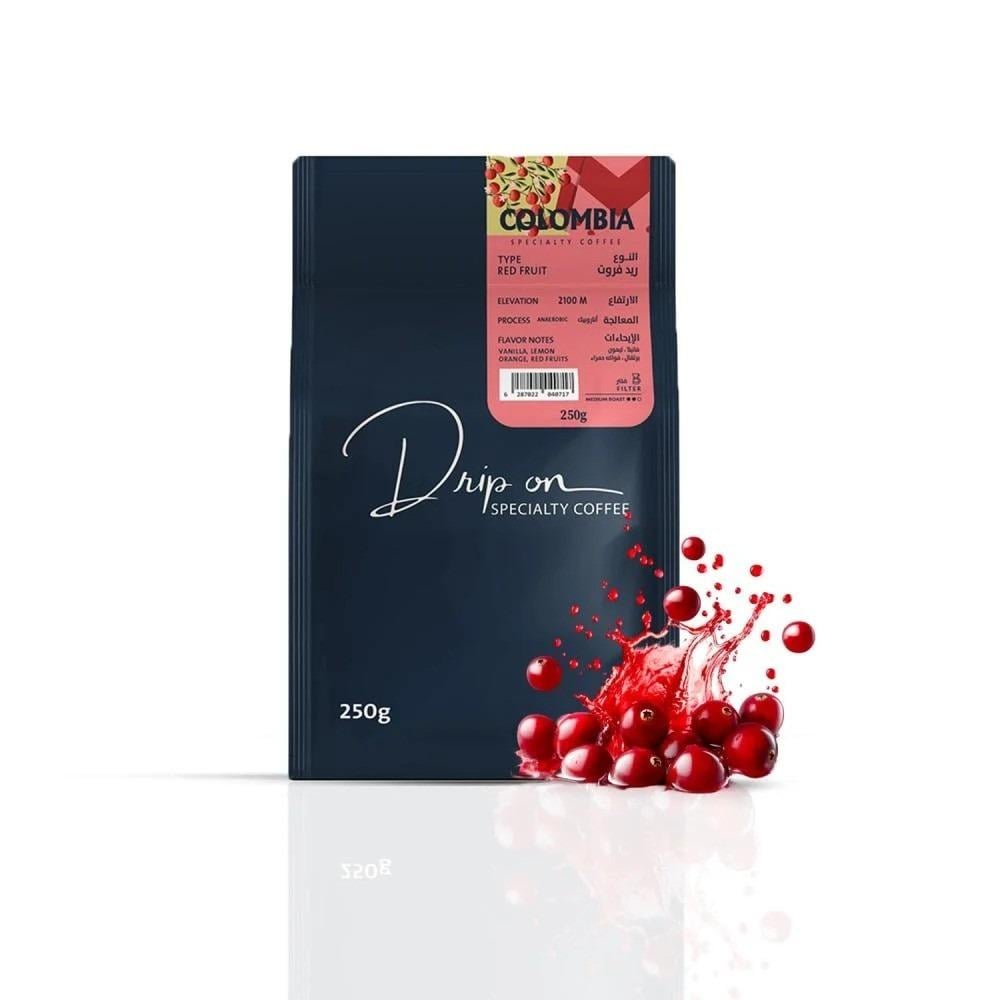
If you're looking for Colombian specialty coffee beans that combine balance, natural sweetness, and a variety of aromas, Drip On Roastery offers an experience that helps you choose the perfect blend for your preferred brewing method. Colombian coffee isn't a single, fixed flavor; it's a vast world whose characteristics vary depending on the region, altitude, variety, processing method, and roast level, making it suitable for both beginners and discerning palates.
Colombian coffee is known for its ability to produce well-balanced cups that are easy to understand and enjoy, with options that evoke notes of chocolate, caramel, and nuts, as well as others that are more fruity, floral, and vibrant. Therefore, it can be used in hand-drip brewing, espresso, latte art, and French press, provided the appropriate crop, roast, and grind are selected for each method.
In this guide you will learn about the characteristics of specialty Colombian coffee , its most prominent sensory features, the effect of origin, processing and roasting on taste, how to choose the right packaging, prepare it in a balanced way, and maintain its freshness after opening.
Why does Colombian coffee hold such a special place?
Colombia boasts a diverse coffee-growing environment, which is reflected in the varying flavors from region to region. Climate, mountainous terrain, temperature, soil type, and harvest time all contribute to shaping the character of the bean before it reaches the roastery.
When buying Colombian specialty coffee beans, you'll notice that some varieties offer a pleasant acidity reminiscent of red fruits or citrus, while others lean towards chocolate, sweetness, and caramel. This diversity makes Colombian coffee a suitable starting point for those looking to transition from commercial to specialty coffee; they can find familiar flavors and then gradually explore more complex options.
The balance between sweetness, acidity, and body also makes many Colombian coffees versatile in preparation, not limited to a single recipe. However, it shouldn't be assumed that all Colombian coffee will be the same; the product label, processing method, and roasting technique are more important than the country's name alone.
What makes Colombian coffee flavor so special?
There is no single answer that describes every Colombian specialty coffee bean , but some flavor families can be noted that will help you form a preliminary idea:
- Hints of chocolate, caramel, and brown sugar.
- Nutty and cocoa flavors in a balanced crop.
- Red fruits or citrus fruits in some vital crops.
- Floral or honey-colored touches in the more delicate crops.
- Medium to full consistency depending on roasting and preparation method.
- A clear sweetness that makes the cup enjoyable without many additions.
The suggestions written on the packaging aren't necessarily artificial flavorings, but rather sensory descriptions of what the taste and aroma of the coffee might remind you of. These suggestions are more pronounced when you use the right water, the correct grind, a balanced recipe, and allow the coffee to cool slightly before tasting.
For more information:
Colombian Specialty Coffee Beans | Cotton Candy Anaerobic 1 kg
Colombian specialty coffee beans | Anaerobic watermelon 250g
Coffee regions in Colombia and the difference in personality
Knowing the region helps you understand the product more deeply, because the name Colombia alone is very broad. There are regions that produce highly bioavailable crops, and others that produce more balanced and full-bodied coffee.
Hoila
Many Huila beans offer an appealing blend of sweetness and acidity, and may display red fruits, citrus, or caramel notes. Therefore, they are well-suited for hand-drip brewing and can also produce a vibrant espresso when properly roasted.
Nariyo
Nariño wines tend toward clarity, elegant acidity, and floral or fruity notes. They are best suited for those who appreciate clean distillation glasses that reveal the wine's nuances.
Tolima
Tolima's produce is diverse, sometimes combining fruit, chocolate, and sweetness. The final character depends on the farm, variety, and processing, so it's best to read the product label rather than just the region name.
Antioch
Some Antiochian crops offer a well-balanced classic character, with notes of cocoa, nuts, and caramel, making them appealing for espresso, milk-based drinks, and everyday use.
When choosing specialty coffee beans from Colombia, compare two regions or crops using the same brewing method. You'll notice that variations in origin within a single country can sometimes be as significant as differences between countries.
The effect of the processing method on taste
The processing method is the technique used to separate the beans from the coffee fruit and dry them, and it has a direct effect on sweetness, texture, and flavor clarity.
Washed treatment
The washed process is common in many Colombian wines. It often yields a clean, clear glass, with balanced acidity and a better ability to showcase the wine's origin characteristics. If you appreciate balanced flavors and subtle nuances, this processing method can be a good starting point.
Dry treatment
The fruit dries around the berry before being separated, which can enhance the sweetness and texture and add more intense fruity flavors. These crops require balanced roasting and preparation to develop their sweetness without becoming overly heavy.
Honey treatment
Some of the sugary substance remains around the bean during drying, which can result in a balance between the cleanliness of the washed processing and the sweetness of the dried processing. This is a good option for those who want a glass that is both sweet and clear.
experimental treatments
Some varieties utilize more sophisticated brewing techniques to bring out unconventional flavors. These may appeal to the connoisseur who enjoys intense fruity experiences, but they aren't always the best choice for those seeking a calm, everyday coffee.
Before buying Colombian specialty coffee beans, read the processing section, as it may explain a large part of the difference between one crop and another, even if they are from the same region.
How does the degree of roasting affect it?
Roasting not only adds color, but also determines how much of the original grain's characteristics will be revealed and how much the roasting flavors will come through.
light roasting
It typically retains fruity and floral notes and acidity to a greater extent. It's well-suited to many V60, Chemex, and Kalita recipes, but requires proper grinding and sufficient water temperature to extract the sweetness.
Medium roast
It strikes a balance between the characteristics of its origin and the flavors of caramel and chocolate. It's a versatile option for those who want to use the container for drip and espresso, or are looking for an easy-to-prepare everyday coffee.
dark roast
This roasting process enhances the flavors, texture, and bitterness, and may suit those who prefer a strong espresso or milk-based drinks. However, over-roasting can obscure the distinctive characteristics of the crop.
When choosing Colombian specialty coffee beans, don't judge the strength of the coffee solely by the color of the beans. You can achieve a richer brew with a medium roast by adjusting the ratio and grind, while a dark roast may be bitter without being of higher quality.
How do you choose the right crop for your taste?
Start with the flavors you actually drink, not the complex jargon. Ask yourself: Do I like smooth, chocolatey coffee, or fruity and vibrant? Do I drink it black, or do I add milk? Do I use a V60, an espresso machine, or a French press?
If you're a beginner, choose Colombian specialty coffee beans with hints of chocolate, caramel, and nuts, and a medium roast; these will often be easier to understand and use. If you prefer drip brewing and are looking for greater clarity, try a washed-out variety with hints of citrus or red fruits.
The selection can be divided into three categories:
- For everyday coffee: balanced flavors, pronounced sweetness, and a medium body.
- For specialty distillation: fruity or floral notes and washed or honey-treated.
- For espresso and milk: chocolate, caramel, nuts, and medium roast suitable for pressurized extraction.
Choosing the right grains for V60
Colombian specialty coffee beans stand out in the V60 when the recipe is balanced; because the paper filter helps produce a clean cup that highlights the differences in sweetness, acidity, and nuances.
Recipe for the start of the process
- Use 15 grams of coffee.
- Add about 240 to 250 grams of water.
- Use a medium grind to start with.
- Rinse the filter and heat the tool and cup.
- Add a small amount of water to saturate the coffee.
- Wait for about 30 to 40 seconds.
- Complete the pouring in regular batches.
- Monitor the drip time, then adjust the grinding according to the result.
If the beaker is acidic and weak, grind slightly finer or increase the water temperature. If it is bitter and dry, grind coarser or reduce the extraction time. Do not change more than one variable in a single experiment.
Preparing Colombian coffee as espresso
Colombian specialty coffee beans can produce a well-balanced espresso that combines sweetness, body, and a gentle acidity. Beans with chocolate and caramel notes are particularly successful with lattes and cappuccinos, while fruity beans offer a more vibrant espresso.
Start with a recipe that fits your machine's basket, set a fixed dose, and then monitor the volume of the brew and the time. If the espresso comes out too quickly and is weak and sour, use a finer grind. If it comes out too slowly and is bitter or dry, use a coarser grind.
Also pay attention to the coffee distribution within the basket, even tamping, machine cleanliness, and water temperature. Don't judge the yield after the first extraction; it may take several attempts to achieve the desired consistency.
French press preparation
The French press is suitable for those who prefer a fuller body and a simpler brewing method. Use a relatively coarse grind, add water evenly, then let the coffee sit for several minutes before slowly pressing.
Colombian specialty coffee beans with chocolatey and nutty notes work well in a French press because the higher body helps to highlight the warm flavors. To minimize grounds, avoid a fine grind and heavy pressing, and pour the coffee after brewing instead of leaving it with the beans for too long.
The importance of grinding and milling
Grit is one of the most influential factors in the result. If it's too fine, the water passes through slowly and extracts compounds that can make the drink bitter and dry. If it's too coarse, the water passes through quickly and the drink is weak or acidic.
Buying whole Colombian specialty coffee beans and grinding them before brewing gives you more flexibility and helps preserve the aroma for longer. If you don't have a grinder, choose the grind setting that best suits your brewing method when ordering; don't just say "medium grind" without specifying V60, Chemex, French Press, or Espresso.
A gear grinder usually helps to get more consistent particles than a knife grinder, but what's important is your ability to reset and gradually adjust the setting.
Water and its role in enhancing flavor
Most coffee is water, so its quality greatly affects the taste. Use clean water with a pleasant taste, and avoid water with a strong odor or noticeable saltiness. You may notice a significant difference when changing the water source, even if the beans, grind, and recipe remain the same.
When preparing Colombian specialty coffee beans, do not use boiling water immediately if the roast is medium or dark; let it cool slightly. Light roasts may require higher heat to extract sweetness and detail. Start with the roaster's recommendation, then adjust according to your taste.
How do you read a product label?
A good product page helps you anticipate the experience before you buy. Look for:
- Country of origin and region.
- Name of the farm or product, if available.
- The lineage.
- Height.
- Method of processing.
- Suggestions.
- Degree of roasting.
- Suggested preparation methods.
- Package weight.
- Roasting date or freshness policy.
- The choice is whole grain or ground.
The clearer this data is, the easier it becomes to compare Colombian specialty coffee beans with other crops and make a decision that suits your taste, rather than relying on the picture or price alone.
Buy Colombian coffee online
When shopping online, don't let the lowest price be your only criterion. Compare the quality of information, package size, roasting date, grinding options, packaging, and shipping policy.
Before completing the order:
- Specify the basic preparation method.
- Choose the flavor family that is closest to your taste.
- See processing and roasting.
- Choose a weight that suits your consumption.
- Select whole grains or a suitable grind.
- Check the order processing and delivery time.
- Keep the suggested preparation recipe.
You can start with a small pack of Colombian specialty coffee beans before buying a larger quantity, especially if the flavor profile or processing is new to you. A structured trial is better than stockpiling a quantity that doesn't suit your taste.
Why choose a Drip On roastery?
The Drip On roastery helps coffee lovers access suitable options for different brewing methods, while also allowing them to learn about the characteristics of the beans before ordering. The experience is enhanced when the origin, processing, aroma, and roasting information are clearly displayed, transforming the purchase from guesswork to a decision based on personal preference.
When choosing Colombian specialty coffee beans from Drip On Roastery, review the suggested uses for each bean and decide whether you want it for drip coffee, espresso, or milk-based drinks. You can also compare multiple products or choose a variety pack if you're still exploring your preferences.
Proper storage after opening the package
Coffee is affected by air, humidity, heat, light, and strong odors. Keep the container tightly closed in a dry, cool place away from the oven or sunlight.
To preserve Colombian specialty coffee beans :
- Close the package after each use.
- Grind only the required amount.
- Do not leave the grains inside the mill bowl for long days.
- Avoid storing them next to spices.
- Choose a weight that suits your consumption.
- Do not transfer it to a transparent container exposed to light.
- Divide large packages into manageable portions when needed.
A larger package isn't always more economical if the grains lose their flavor before you consume them. Consider the value in terms of the number of good cups, not just the price per kilogram.
Common mistakes when preparing
Even the best Colombian specialty coffee beans can produce poor results if simple mistakes are made, such as:
- Using an inappropriate grinding tool.
- Do not weigh the coffee and water.
- Using water with a bad taste.
- Change all the ingredients of the recipe together.
- Store grains in a hot or humid place.
- Judge the harvest from the first cup.
- Using unclean tools.
- Add a large amount of water without adjusting the dose.
- Buying a quantity that exceeds the consumption rate.
Start with a consistent recipe and record the grind, dosage, water, and time, then change only one factor; because this method helps you understand why you are improving or regressing.
Get to know me:
Specialty coffee shop in Saudi Arabia
Pre-purchase checklist
Before adding Colombian specialty coffee beans to your basket, make sure of the following:
- The region and origin are explained.
- The processing is tailored to the flavor you want.
- The suggestions are close to your taste.
- Roasting is suitable for this method of preparation.
- The weight is proportional to your consumption rate.
- The grinding option is clearly defined.
- The roasting date or freshness policy is declared.
- Storage and shipping instructions are clear.
- There is a starting recipe or preparation recommendation.
Colombian specialty coffee beans offer a wide range of coffee discoveries, from well-balanced chocolatey cups to more vibrant fruity and floral crops. Your best choice will be determined by region, processing, roasting, nuances, and brewing method, not just by the country's name.
Start by determining your taste and your brewing equipment, then choose a suitable size pack. Grind before brewing if possible, and use good quality water and a consistent recipe. With the Drip On roaster, you can explore Colombian beans suitable for V60, espresso, or milk-based drinks, then refine the result step by step until you achieve a well-balanced cup that clearly reflects the characteristics of the beans.
Frequently Asked Questions
Is Colombian coffee sour?
Some crops may have a pleasant fruity acidity, while others are more chocolatey and balanced. The acidity you perceive also depends on the roasting, milling, and extraction processes.
Are milk-based drinks suitable?
Yes, especially those with hints of chocolate, caramel, and nuts. Choose a roast suitable for espresso so the flavor remains pronounced after adding milk.
Is it better to buy whole grains?
Whole beans are often best for preserving aroma and allowing for grind adjustments. However, ground coffee is a practical option if a grinder isn't available, provided you choose a suitable brewing method and use it within a reasonable timeframe.
What is the best treatment for beginners?
The washed-processed version is a clear and balanced choice for many beginners, while the dried-processed version offers a more intense sweetness and fruitiness. The final choice depends on personal taste.
What is the appropriate weight for the first order?
Start with a small or medium-sized package until you're sure the produce suits your taste and preferences. You can then purchase a larger quantity if you consume it regularly.
How do I know if the extraction is unbalanced?
A sour, weak taste may indicate under-extraction, while bitterness and dryness may indicate over-extraction. Begin by gradually adjusting the grind before changing the other parameters.