
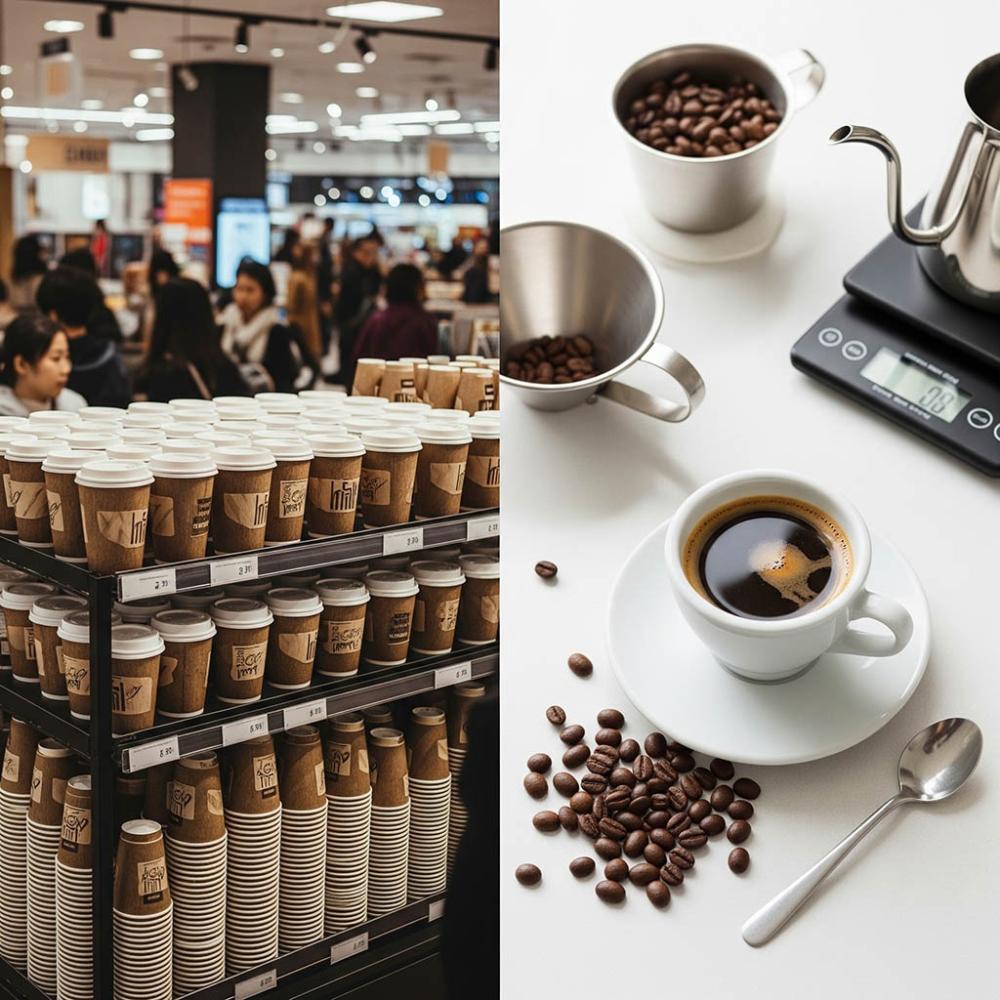
Have you ever wondered what makes the difference between the coffee you drink every day and that exceptional cup that leaves an unforgettable impression? The answer lies in the difference between specialty coffee and commercial coffee. In this article, we'll dive into the world of coffee to uncover the key differences between these two types, and why many people consider specialty coffee a unique experience worth your attention.
What Is Commercial Coffee?
Commercial coffee is what you usually find in supermarkets and large coffee chains. Its main goal is mass production to meet global demand. This coffee usually has the following characteristics:
- Quality and flavor: the focus is often on quantity rather than quality. It may contain a mix of beans from different sources, and beans with minor defects may be used. The flavor is uniform and consistent, often leaning toward bitterness or excessive acidity, and it may be dark roasted to hide any defects in the beans.
- Production and processing: commercial coffee is produced in huge quantities using large machines and equipment. Processing may be less precise, with the focus on efficiency and speed.
- Price: it's usually much cheaper than specialty coffee, making it affordable for everyone.
- Packaging: it may not provide detailed information about where the coffee comes from or how it was processed.
What About Specialty Coffee?
Specialty coffee is a completely different story. It represents the peak of quality in the coffee world, with attention paid to every step of the production chain to ensure a unique experience in every cup. Here's what sets it apart:
- Quality and flavor: specialty coffee is graded using a strict scoring system by certified evaluators (Q Graders), and it must score 80 points or more out of 100. This grading ensures the beans are clean and free of defects, offering a wide range of complex, balanced flavors such as fruit, nuts, chocolate, or even flowers.
- Origin and traceability: specialty coffee beans can be traced precisely, from the farm to the cup. Specialty coffee farmers process their beans with great care, from growing specific coffee varieties, through selective harvesting, to drying and processing methods (such as washed, natural, or honey).
- Roasting: specialty coffee is roasted by expert roasters who fully understand the characteristics of each type of bean. The goal is to bring out the best flavors in the beans, not to hide them.
- Fairness and sustainability: farmers who produce specialty coffee are often paid higher prices, which supports sustainability and encourages good farming practices. This ensures a better quality of life for farmers and their families.
- Packaging: specialty coffee packaging includes detailed information about the coffee's origin, variety, processing method, and expected tasting notes.
The Key Differences

Ready to taste the difference? Explore freshly roasted specialty coffee at Drip On Coffee.